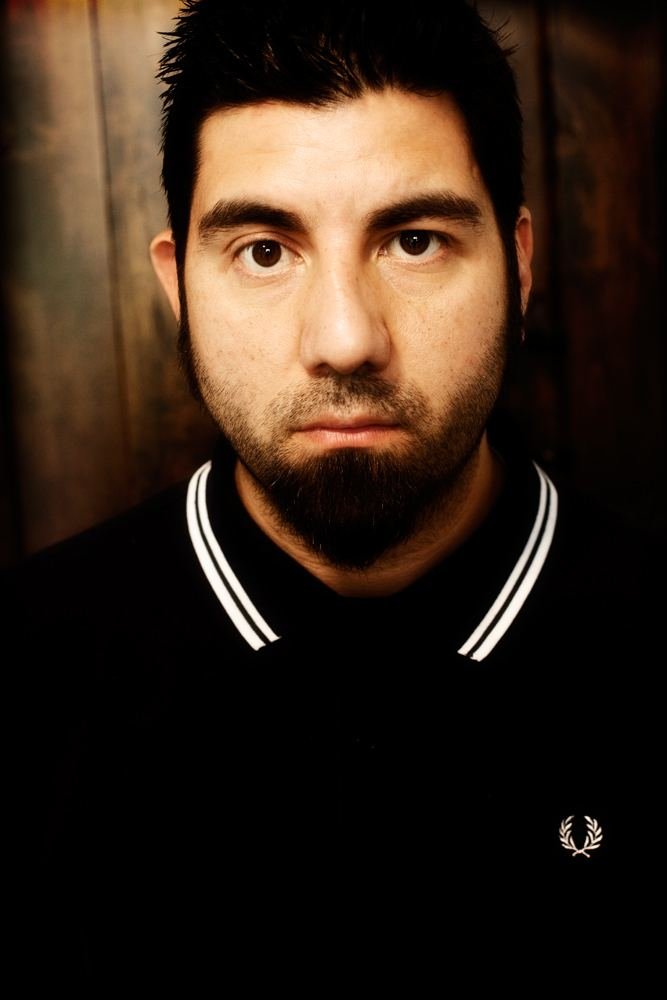
Before the roaring crowds, the iconic vocals, and the unmistakable sound of Deftones captivated a generation, Chino Moreno's early life and childhood laid the groundwork for the artist he would become. From his birthplace in Sacramento to the unique blend of cultures that defined his family, every formative experience contributed to the rich tapestry of his musical identity. Understanding these foundational years isn't just a trip down memory lane; it’s an essential exploration into the roots of an artistic legend.
The journey begins not on a stage, but in the heart of a vibrant California city, where a young Camillo Wong Moreno, soon to be known as "Chino," was finding his voice amidst a world full of influences.
At a Glance: Key Takeaways from Chino Moreno’s Early Years
- Birthplace & Upbringing: Born June 20, 1973, in Sacramento, California, and raised in the diverse Oak Park borough.
- Multicultural Heritage: His nickname "Chino" reflects his rich background—mother Deborah A. Wong is of Chinese descent, father Camillo Diaz Moreno, Sr., is of Mexican heritage.
- Musical Awakening: Attended McClatchy High School, where he discovered a profound passion for metal music.
- Founding Deftones: Met future bandmates Stephen Carpenter and Abe Cunningham during high school.
- Early Start: Co-founded the trailblazing band Deftones in 1988 at the tender age of 15, marking a remarkably early entry into the music scene.
- Formative Influences: His diverse upbringing and local Sacramento environment deeply influenced his unique vocal style and lyrical themes.
The Sacramento Canvas: Birth and Early Environment
Chino Moreno’s story begins in Sacramento, California, a city often overshadowed by its flashier coastal counterparts but rich in its own unique character and artistic undercurrents. Born Camillo Wong Moreno on June 20, 1973, he spent his earliest years steeped in the everyday rhythms of this Californian capital. The specific borough where he was raised, Oak Park, holds particular significance.
Oak Park, historically one of Sacramento's oldest and most diverse neighborhoods, offered a microcosm of urban life in the 70s and 80s. It was a place where different cultures intersected, where working-class families built lives, and where the raw energy of the streets could seep into the consciousness of a young, impressionable mind. For a budding artist, such an environment isn't just a backdrop; it's a living, breathing muse, offering textures, sounds, and stories that might subtly inform one's worldview and creative output. This setting allowed for an early exposure to varied sounds and experiences, far removed from any insulated artistic bubble.
This diverse upbringing in Oak Park provided a foundation for the multifaceted artist Chino would become, grounding him in a reality that was both gritty and inspiring. It was here, surrounded by the ordinary and the extraordinary, that the seeds of his distinctive artistic vision were first sown, long before he ever picked up a microphone professionally. You can truly see how the specific geographical and cultural tapestry of Sacramento influenced Chino Moreno's formative years.
The Echo of Heritage: Multicultural Roots and the "Chino" Nickname
Perhaps no single aspect of Chino Moreno's early life is as defining or as poignant as his multicultural heritage, a reality beautifully encapsulated by his universally recognized nickname. His birth name is Camillo Wong Moreno, but the world knows him as "Chino." This moniker, meaning "little Chinese boy" in Spanish, is far more than just a nickname; it’s a direct reflection of his family's rich and diverse background.
Moreno's mother, Deborah A. Wong, hails from Chinese descent, bringing with her a lineage steeped in a vast and ancient culture. His father, Camillo Diaz Moreno, Sr., is of Mexican heritage, connecting Chino to the vibrant traditions, language, and history of Mexico. This unique blend of Chinese and Mexican ancestry isn't merely a genealogical fact; it's a powerful identifier that shaped his perspective, his identity, and, arguably, his artistic expression.
Imagine growing up navigating these two distinct, yet equally profound, cultural currents. It fosters a unique worldview, a nuanced understanding of identity, and an inherent appreciation for diverse narratives. This bicultural upbringing could contribute to an artist's ability to blend seemingly disparate elements—be it musical genres, vocal styles, or lyrical themes—into something entirely new and compelling. It’s a subtle alchemy that, for Moreno, likely meant a broader palette of emotional and expressive resources to draw upon. This rich background is a key factor in understanding multicultural identity in music and its profound impact on artists.
This early immersion in a multicultural household meant a constant interplay of traditions, languages, and worldviews. It likely instilled a fluidity and openness that would later manifest in his groundbreaking approach to music, where boundaries are less about restriction and more about opportunity for innovation.
The Crucible of Creativity: McClatchy High School and the Birth of a Band
Every great story has a starting point, and for Chino Moreno's musical journey, that point was McClatchy High School. This is where the burgeoning artist, still just a teenager, began to actively explore the sounds that would come to define his life. It was within these hallways and after-school hangouts that his passion for metal music truly ignited, morphing from a casual interest into an all-consuming fire.
The late 1980s were a fascinating time for heavy music. Thrash metal was peaking, glam metal was still very much a force, and alternative sounds were beginning to bubble up from the underground. For a young, impressionable musician, this landscape offered an intoxicating array of sonic possibilities. Chino immersed himself in it, likely devouring albums, dissecting riffs, and finding his own voice through the powerful, cathartic energy of metal. This period of intense discovery is crucial for any artist, as it forms the bedrock of their aesthetic and technical foundations.
Forging Connections: Meeting Future Deftones
Crucially, McClatchy High School wasn't just a place of personal discovery; it was the meeting ground for what would become one of the most influential bands of its generation. It was here that Chino Moreno crossed paths with Stephen Carpenter, the prodigious guitarist who would lay down Deftones’ signature heavy riffs, and Abe Cunningham, the dynamic drummer who would provide the band’s rhythmic backbone.
These were more than just classmates; they were kindred spirits, drawn together by a shared love for the burgeoning heavy music scene and a collective yearning to create something new. The casual conversations, the shared album recommendations, the hours spent jamming in garages – these were the informal auditions that laid the groundwork for a formidable musical partnership. It’s a testament to the power of high school friendships and shared artistic vision that such a potent creative force could emerge from such humble beginnings.
Deftones: A Teenage Genesis (1988)
The year 1988 stands as a monumental milestone in Chino Moreno's early life: at just 15 years old, he, alongside Stephen Carpenter and Abe Cunningham, officially co-founded Deftones. This wasn't just a garage band experiment; it was the very genesis of a group that would profoundly impact the landscape of alternative metal and beyond.
Starting a band at such a young age speaks volumes about their collective drive and inherent talent. Most teenagers at 15 are grappling with schoolwork, social pressures, and finding their place in the world. Moreno, Carpenter, and Cunningham, however, were already channeling their energy into something much larger: crafting a unique sound that defied easy categorization. This early start meant that the band's core chemistry and musical direction were allowed to develop organically, free from the pressures and expectations that often burden older, more industry-aware musicians.
The youthful enthusiasm, unbridled creativity, and lack of preconceived notions in Deftones' early days allowed them to experiment fearlessly. They weren't trying to fit into a genre; they were creating their own. This foundational period, marked by raw energy and pure passion, established the innovative spirit that would become a hallmark of Deftones' career. It's an inspiring example of how early commitment to a craft, even in one's mid-teens, can lead to groundbreaking achievements.
Weaving the Threads: How Early Life Shaped an Artist
The elements of Chino Moreno’s early life and childhood—his Sacramento upbringing, his multicultural heritage, and his high school musical awakening—aren't isolated events. They are inextricably woven threads that collectively shaped the distinct voice and vision of the artist we know today.
The Influence of Place: Sacramento's Unsung Role
Sacramento, particularly the Oak Park borough, provided a fertile, if understated, ground for creative development. It wasn't the glitz of Los Angeles or the musical melting pot of San Francisco; it was a real, grounded place. This environment likely fostered a sense of authenticity and a connection to the everyday, which is often reflected in Deftones' music. Their sound is rarely about escapism; it's often about confronting the raw, beautiful, and sometimes unsettling realities of human experience. The diverse sounds and energies of a city like Sacramento can subtly influence an artist's approach, much like Sacramento's vibrant music scene has done for many local talents.
Identity and Expression: The Power of Biculturalism
Moreno’s bicultural identity is arguably the most significant non-musical influence on his artistry. The interplay of Chinese and Mexican heritage offers a rich wellspring of perspective. This unique lens might contribute to his captivating duality—the ability to be both intensely vulnerable and ferociously aggressive within the same song, often within the same phrase. It speaks to a deep understanding of contrasting emotions and experiences, perhaps mirroring the navigation of different cultural identities.
Artists with diverse backgrounds often possess a heightened sensitivity to nuances, a broader emotional range, and a unique ability to fuse disparate elements. For Moreno, this could translate into his lyrical abstractness, his ability to convey profound emotion without explicit narrative, and his genre-bending vocal delivery. He doesn't just sing; he emotes, screams, whispers, and croons, often within a single track, showcasing a fluidity that might be rooted in a childhood spent embracing multiple worlds.
Early Passion: The Unfiltered Sound
Starting a metal band at 15 is a testament to an early, unfiltered passion. Before industry pressures, before critical expectations, there was just the raw desire to make noise, create art, and connect with like-minded individuals. This pure, unadulterated drive from their teenage years instilled in Deftones a fearless approach to songwriting that has persisted throughout their career. They learned to trust their instincts, to push boundaries, and to never settle for the conventional. This is a common thread among artists who break new ground, often looking back to influential metal bands of the era for inspiration, yet always forging their own path.
Common Questions and Misconceptions About Chino Moreno’s Early Life
Was Chino Moreno always into metal music?
While he is most famous for his work in metal, Chino Moreno's musical tastes are famously eclectic. However, his passion for metal music specifically solidified during his high school years at McClatchy High. This era was critical for him to dive deep into the genre that would become the foundation for Deftones. It's safe to say that while his influences grew, metal was a crucial early spark.
Did his multicultural background directly influence his lyrics?
While Chino's lyrics are often abstract and open to interpretation, his multicultural background profoundly influences his worldview and emotional depth, which in turn informs his writing. He doesn't typically write explicitly about his Chinese or Mexican heritage in a direct narrative sense. Instead, the richness and complexity of navigating multiple cultural identities likely contribute to the nuanced layers, emotional range, and enigmatic quality that define his lyrical output. It's more about the subconscious impact on his artistic perspective than direct storytelling.
How did growing up in Oak Park, Sacramento, impact Deftones' sound?
Growing up in Oak Park, a diverse and historically working-class neighborhood in Sacramento, likely imbued Chino Moreno and his bandmates with a grounded, authentic perspective. Unlike scenes from more affluent areas, Oak Park offered a raw, unvarnished view of life that often finds its way into the texture and emotional weight of Deftones' music. This environment provided a sense of reality and grit, fostering an artistic approach that felt genuine and untamed, drawing on the very fabric of Oak Park's rich history and community spirit.
Was Deftones his first band?
Yes, Deftones was the first serious and officially formed band for Chino Moreno, Stephen Carpenter, and Abe Cunningham together. While they likely dabbled in musical experimentation prior to 1988, Deftones represents their formal entry into the band world as a collective unit. Their early formation at such a young age speaks to their immediate chemistry and shared vision.
The Undeniable Trajectory: From Childhood to Icon
Chino Moreno’s journey from a young boy in Sacramento’s Oak Park to the enigmatic frontman of Deftones is a testament to the powerful, often unseen, forces that shape an artist. His multicultural heritage provided a unique lens through which to view the world, fostering a depth and complexity that would later manifest in his groundbreaking music. His early passion for metal, ignited in the hallways of McClatchy High, brought him together with the individuals who would become his lifelong creative collaborators.
These aren't just biographical details; they are the foundational elements that built an icon. Every scream, whisper, and soaring melody Chino Moreno delivers is, in some subtle way, an echo of those early years—a tribute to the place, the people, and the heritage that allowed him to become one of music's most compelling and influential voices. His story reminds us that true artistry is often forged in the intricate interplay of background, environment, and an unwavering commitment to one's craft, starting long before the world ever takes notice.