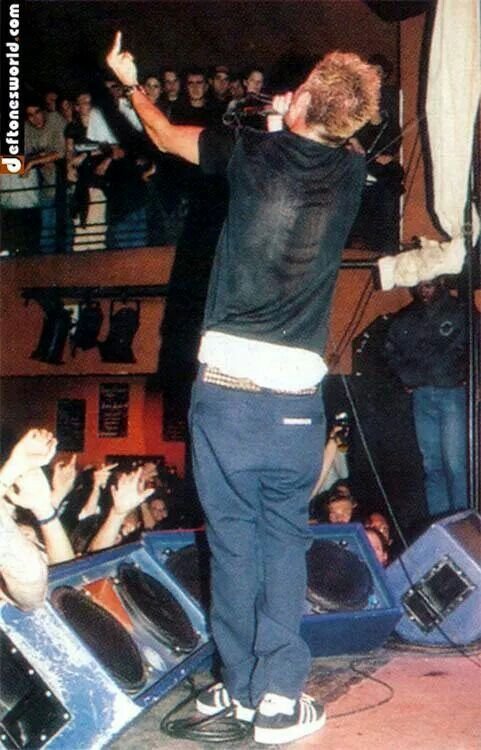
The 90s alternative music scene was a swirling vortex of grunge, punk revival, industrial clang, and burgeoning nu-metal. Amidst this sonic tapestry, a distinct voice began to carve out its own space, one that defied easy categorization and injected a raw, emotionally charged intensity that would leave an indelible mark. This was the impact of young Chino Moreno on 90s alternative music, a force that helped redefine what a frontman could be and what alternative rock could sound like.
Moreno, as the enigmatic voice of Deftones, wasn't just singing; he was performing an exorcism, weaving abstract narratives with a vocal range that shifted from serene whispers to blood-curdling screams in an instant. His youthful contributions weren't merely about catchy choruses or angsty lyrics; they were about crafting atmosphere, embracing vulnerability, and pushing the boundaries of what was considered heavy.
At a Glance: Chino Moreno's Early Influence
- Vocal Innovation: Pioneered a style where the voice was an instrument, emphasizing texture and emotion over explicit lyrical narrative, particularly on early albums.
- Genre-Bending: Helped Deftones navigate between metal, alternative, shoegaze, and dream-pop, laying groundwork for subgenres.
- Authentic Performance: Delivered raw, confident-yet-nervous performances, often relying on improvisation and feeling over rigid structure.
- Accidental Iconography: Contributed to the creation of iconic 90s imagery, like the "Around The Fur" album cover, that became emblematic of the era's subculture.
- Emotional Depth: Introduced a lyrical and vocal vulnerability that contrasted with the machismo often present in heavy music, appealing to a broader audience.
The Voice as an Instrument: Redefining Vocal Delivery in the 90s
Before Deftones became a household name in alternative circles, Chino Moreno was navigating the anxieties and creative uncertainties of a young artist. His approach to vocals, particularly on the band's debut album, "Adrenaline," was less about lyrical precision and more about raw, uninhibited expression. As Moreno himself reflected, listening back to "Adrenaline" was "difficult" due to a palpable lack of confidence and nervousness. This wasn't a flaw, however; it was the birth of a style.
Instead of meticulously crafted lyrics, Moreno often relied on freestyling, allowing his voice to become another textural layer in Deftones' sonic assault. The album famously didn't include printed lyrics, underscoring this focus on the auditory experience rather than literal interpretation. This move was revolutionary. In an era where many frontmen were either delivering poetic diatribes or anthemic singalongs, Moreno used his voice as an additional instrument—a guttural roar, a fragile whisper, a soaring wail—that conveyed emotion directly, rather than solely through words. This innovative approach resonated deeply with listeners seeking something more visceral and less conventional, setting Deftones apart from their contemporaries and solidifying Chino Moreno's early career as a period of significant artistic discovery.
Crafting the Sonic Landscape: Early Studio Sessions and Maverick Records
The journey to establish this unique sound wasn't without its challenges. Deftones signed with Maverick Records, a label that, thanks to the massive success of artists like Alanis Morissette, had the financial buffer to take risks on less immediately commercial acts. This proved crucial for Deftones. Despite "Adrenaline's" low initial sales, Maverick's deep pockets allowed the band the crucial opportunity to create a second record. This grace period was vital for Moreno and the band to mature their sound and solidify their artistic vision without immediate commercial pressure.
The process of recording "Adrenaline" was a learning curve. The rawness you hear on the album is a direct reflection of a young band finding its footing, capturing the energy of their live shows with a nascent understanding of studio dynamics. This period of artistic incubation, supported by a forward-thinking label, was essential for the band to evolve beyond their initial sound and truly hone the characteristics that would define their later, more acclaimed work.
"Around The Fur": Accidental Iconography and Party Culture
If "Adrenaline" laid the groundwork, "Around The Fur" catapulted Deftones into the alternative music stratosphere, not just with its music but also with its instantly recognizable imagery. The album cover, a striking black-and-white photo of a woman in a hot tub, became one of the band's top-selling merchandise items—a testament to its evocative power, even if Moreno himself found it "random and nonsensical."
Taken by photographer Rick Kosick (known from Big Brother magazine and later "Jackass" fame) during the album's recording in Seattle, the photo perfectly encapsulates the band's youthful energy and the uninhibited atmosphere of the time. Moreno recounted how the band, all around 22 and deep into the 90s party scene, frequently invited people to their apartment's hot tub. The image, captured during one such casual night, possesses a "very 90s" aesthetic, with its fisheye lens effect reminiscent of Beastie Boys' photography. The woman on the cover was a friend they'd met in Seattle, a spontaneous element that became an enduring symbol for a generation. This accidental iconography perfectly mirrored the band's music—unpolished, authentic, and undeniably captivating. It wasn't just a band; it was a vibe, a moment, a culture, all synthesized by the youthful spirit of Chino Moreno's early career and his bandmates.
The Deftones Identity: From "Silly" Name to Enduring Legacy
Every band needs a name, and Deftones' origin story is as unpretentious as their early sound. Guitarist Stephen Carpenter suggested "Deftones" before their very first show. Drummer Abe Cunningham initially even misspelled it on tickets as "d-e-a-f-tones." Moreno, with characteristic humility, considers the name "silly," much like many band names in retrospect. Yet, he acknowledges its power: "it has worked and gained its own meaning over time."
This evolution from a "silly" moniker to a name synonymous with genre-bending innovation and emotional intensity speaks volumes about the band's journey. It wasn't the name that defined them, but their music and performances that imbued the name with profound significance. This journey from humble beginnings to iconic status is a core part of understanding the band's trajectory through the 90s.
The Art of Performance: Chino's Pre-Show Rituals and Intent
For a frontman whose performance relies so heavily on raw emotion and physical exertion, preparation is paramount. Moreno's pre-show routine offers a glimpse into the discipline behind the apparent chaos. About 35 minutes before taking the stage, he curates a personal playlist that fills his dressing room and eventually the venue's PA system. This isn't just background noise; it's a deliberate attempt to "put everyone in a shared frame of mind," setting the atmosphere for both the band and the audience.
His physical routine is equally meticulous: a shower for vocal steam, getting dressed, brushing teeth, and light physical activities like push-ups, foam rolling, and jumping jacks to "hype himself up." This blend of mental and physical readiness ensures that when Moreno steps into the spotlight, he's not just performing; he's entering a state where he can fully channel the intense, often cathartic energy that defines Deftones' live shows. This dedication to the craft, even in his younger years, underscored the seriousness with which he approached his art, distinguishing Deftones as a band committed to delivering an unforgettable experience every time.
Beyond Nu-Metal: A Genre-Defying Approach
In the 90s, heavy music was often pigeonholed. Nu-metal, with its blend of rap, metal, and often aggressive themes, was gaining traction. While Deftones often found themselves categorized under this umbrella, Chino Moreno's lyrical abstraction and the band's atmospheric soundscapes quickly demonstrated they were charting a different course. Moreno’s willingness to experiment with vocal textures—from ethereal croons to guttural screams, sometimes within the same breath—added a layer of complexity that transcended the typical angst of the era.
This refusal to fit neatly into a box allowed Deftones to appeal to a wider audience, drawing in listeners from the alternative rock, shoegaze, and even dream-pop scenes, in addition to metal fans. Their sound was heavy, yes, but it was also beautiful, introspective, and vulnerable. Moreno's impact was in proving that heavy music could be nuanced, emotionally intelligent, and artistically expansive, paving the way for countless bands to explore similar sonic territories without fear of genre constraints.
Common Questions About Young Chino Moreno's Impact
How did Chino Moreno's early vocal style differ from other 90s frontmen?
Unlike many frontmen who focused on clear lyrical delivery or rap-metal aggression, Moreno prioritized using his voice as an instrument of texture and emotion. He often freestyled and minimized explicit lyrics, especially on "Adrenaline," making his voice another layer in the band's sonic landscape rather than the primary storyteller.
Was Deftones considered a "nu-metal" band in the 90s?
While Deftones emerged during the rise of nu-metal and shared some heavy characteristics, Chino Moreno's abstract lyrics, varied vocalizations, and the band's atmospheric, genre-blending sound quickly set them apart. They often transcended the typical nu-metal mold, incorporating elements of shoegaze, dream-pop, and alternative rock, making them a more unique entity.
How did a lack of confidence affect Chino Moreno's early songwriting?
Moreno admitted that nervousness and a lack of confidence on their debut album, "Adrenaline," led to minimal written lyrics and a greater reliance on freestyling. This perceived limitation ironically birthed a distinctive vocal style where his voice acted more as an instrument than a narrator, creating a raw, emotionally resonant sound.
What was the significance of the "Around The Fur" album cover?
The "Around The Fur" album cover became an iconic image of the 90s alternative scene. Despite being a spontaneous, "random" photo taken during a recording session party, its "very 90s" aesthetic and raw energy resonated with fans, turning it into one of Deftones' best-selling merchandise items and a visual symbol of the era.
The Unfinished Works: A Glimpse into Chino's Creative Future
Even in his earlier days, it was clear that Chino Moreno possessed a restless creative spirit. He’s mentioned having leftover material from "private music" sessions – a kind of creative overflow that didn't fit neatly into Deftones' albums. The suggestion of finishing these pieces for "potential soundtrack opportunities" hints at a broader artistic ambition that extends beyond traditional band structures.
This continuous creative output, the constant exploration of new sounds and ideas, is a hallmark of Moreno's approach. It's a reminder that artists, even young ones making a significant impact, are always evolving, always generating new possibilities. His work ethic, even when young, points to an artist constantly pushing boundaries, a trait that would continue to define his extensive career beyond the 90s.
Enduring Echoes: Chino Moreno's Lasting Blueprint on Alternative Music
The impact of young Chino Moreno on 90s alternative music is undeniable and far-reaching. He arrived on the scene not with a formula, but with an instinct—a primal understanding of how to wield his voice, his emotions, and his band's heavy sound in a way that felt entirely new. He helped lay the groundwork for a new type of heavy music, one that embraced vulnerability and atmosphere alongside aggression.
His willingness to be raw, to admit to nervousness, to let his voice be an instrument of texture rather than just lyrical delivery, directly influenced a generation of vocalists and bands. Deftones, under his artistic guidance, proved that alternative music could be heavy and beautiful, abrasive and ethereal, challenging traditional genre definitions and inspiring countless artists to explore their own unique sonic identities. You can trace a direct line from Moreno's early vocal innovations to the nuanced, emotionally complex soundscapes that continue to define the alternative and metal scenes today. His youthful energy, channeled through raw talent and an unwavering artistic vision, didn't just contribute to the 90s; it helped define its cutting edge and shaped its future.